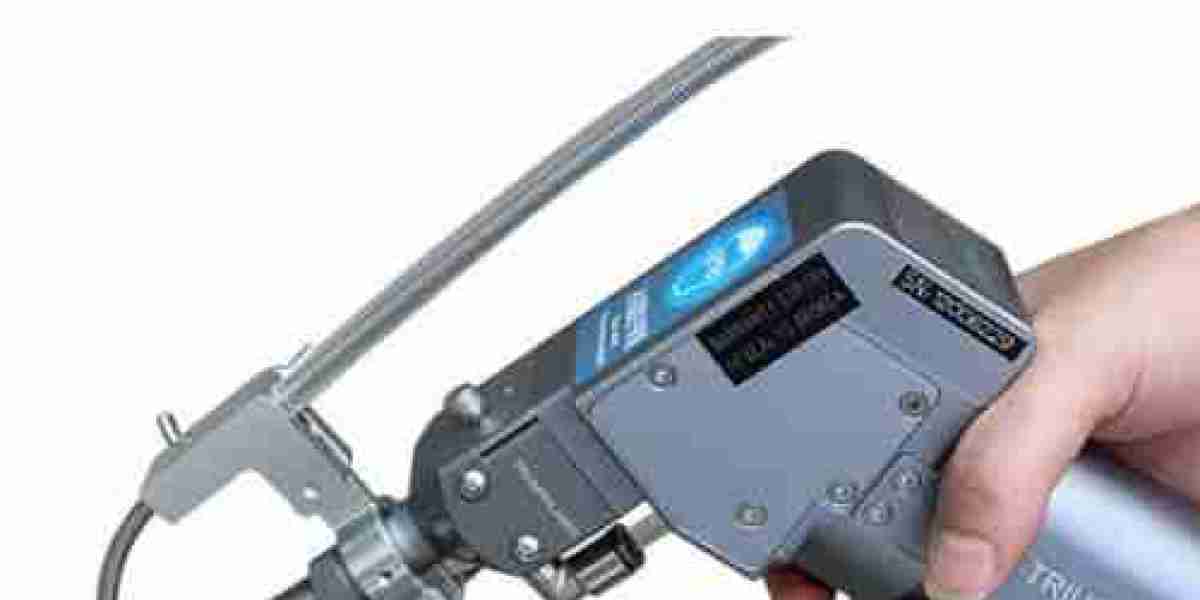

The question arises: Can a hand laser welder truly replace large-scale welding setups for precision and speed? The short answer is — in many scenarios, yes. The long answer requires exploring how this technology works, why it is gaining traction, and where it fits into the future of welding.
Understanding the Hand Laser Welder’s Role
A hand laser welder is designed for mobility, precision, and adaptability. Unlike stationary welding systems, it allows the operator to move freely around complex parts or structures. This flexibility is especially valuable when working on irregular shapes, tight corners, or components that cannot be moved easily.
The laser source delivers a concentrated beam of energy, melting the metal’s surface to create a strong, clean joint. Because the process is highly controlled, it reduces spatter, distortion, and post-weld cleanup requirements.
While large-scale welding setups are ideal for high-volume automated production, a hand laser welder shines in situations requiring quick adjustments, detailed work, or on-site welding tasks.
Where Speed Meets Precision
In the welding industry, speed is often associated with trade-offs in quality. However, a hand laser welder bridges the gap between rapid operation and accuracy. The laser’s heat input is precisely adjustable, enabling welders to tailor the parameters for different materials and thicknesses without compromising the joint's integrity.
This speed advantage becomes critical in industries like automotive repair, aerospace component maintenance, and custom fabrication, where downtime can be costly and deadlines are tight. The operator can move seamlessly from one weld to the next, eliminating the need for constant reconfiguration or long cooldown periods.
Reducing Setup Time for On-Site Work
Traditional welding equipment typically involves transporting heavy gear, running long power cables, and ensuring an optimal work environment. A hand laser welder minimizes this complexity. Its compact form means that an operator can start welding within minutes of arriving at the job site.
This streamlined setup is not only a time-saver but also an operational advantage in environments where space is limited or when the work area is difficult to access.
Adaptability Across Metals and Thicknesses
A hand laser welder can handle a wide range of metals, including stainless steel, carbon steel, aluminum, and certain alloys. Adjusting the laser parameters makes it possible to work with varying material thicknesses, from ultra-thin sheets to thicker components, without changing the welding tool itself.
This adaptability reduces the need for multiple machines and makes the hand laser welder a versatile addition to any professional’s toolkit.
Supporting High-Quality Finishes
One of the standout capabilities of a hand laser welder is its ability to produce clean, visually appealing welds without extensive grinding or polishing afterward. The focused energy input results in minimal heat-affected zones, meaning less warping or discoloration.
For industries where aesthetics matter — such as architectural metalwork, jewelry repair, and consumer product fabrication — this precision can be a significant advantage. The reduction in post-processing time directly impacts overall project efficiency.
Operator Skill and Training
While laser welding technology simplifies many aspects of the process, a hand laser welder still requires proper training to unlock its full potential. The good news is that the learning curve is generally shorter compared to mastering other welding techniques, especially for operators familiar with standard welding concepts.
With the right training, an operator can achieve consistent, professional-grade results in a fraction of the time it might take with traditional equipment. This blend of accessibility and performance makes it appealing to both experienced welders and newcomers entering the trade.
Industrial and Commercial Applications
The growing demand for hand laser welders comes from multiple industries:
Automotive – Rapid repairs, body panel welding, and structural reinforcements without extensive dismantling.
Construction – On-site metal framework assembly and repair in locations where moving large machinery is impractical.
Aerospace – Precision work on lightweight components where accuracy and minimal material distortion are critical.
Manufacturing – Custom metal fabrication for prototypes and small-batch production runs.
Maintenance and Repair – Field servicing of industrial equipment without the need to transport it back to a workshop.
In each of these sectors, the hand laser welder provides a combination of portability, precision, and adaptability that can rival or even surpass large stationary welding setups in specific contexts.
The Role in Reducing Operational Costs
A hand laser welder can indirectly lower operational expenses. Its speed and reduced need for rework mean that more projects can be completed in less time. The minimal post-processing further cuts down labor hours. Additionally, because it uses laser technology, there is often less material waste compared to conventional methods that may require larger filler quantities or more aggressive surface preparation.
Over time, these small savings can add up to significant cost reductions for businesses, particularly in competitive markets where efficiency is crucial.
Portability as a Competitive Edge
Mobility is a defining factor in the appeal of a hand laser welder. For companies that offer mobile welding services or frequently work in off-site locations, being able to transport high-performance welding capabilities in a single compact unit changes the scope of possible projects.
Rather than outsourcing complex on-site welding jobs or moving heavy structures into a shop, teams can take the tool directly to the problem. This not only speeds up the workflow but also reduces logistical hurdles.
Durability and Reliability in the Field
Modern hand laser welders are built for industrial use, meaning they are designed to withstand the rigors of frequent transport and varied work environments. Rugged housings, stable laser sources, and efficient cooling systems ensure that the tool can deliver consistent performance day after day.
This reliability is particularly important when deadlines are tight or when working in environments where equipment downtime can halt entire projects.
The Evolving Future of Welding
The role of a hand laser welder is likely to expand as laser technology becomes more advanced, compact, and cost-efficient. Integration with digital monitoring systems, automated parameter adjustments, and even AI-assisted weld guidance could make the tool even more effective.
As industries continue to prioritize precision, speed, and adaptability, the demand for portable laser welding solutions will likely grow. While large-scale welding setups will always have their place in high-volume automated production lines, the hand laser welder is carving out a significant space of its own in the future of metal joining.
Final Thoughts
A hand laser welder is not just a smaller version of traditional welding equipment — it’s a shift in how welding can be approached in a wide variety of industries. Its combination of mobility, precision, and speed allows it to perform tasks that were once impractical or time-consuming with older technologies.
In many situations, it can replace large-scale setups, especially for jobs that require flexibility, quick turnaround, or work on-site. While it may not fully replace industrial welding lines for mass production, its role as a versatile, high-performance solution is undeniable.
For businesses and professionals seeking to expand their capabilities, reduce operational inefficiencies, and meet modern production demands, investing in a hand laser welder can be a strategic move that delivers measurable returns — not just in output, but in the range of possibilities it opens for the future.